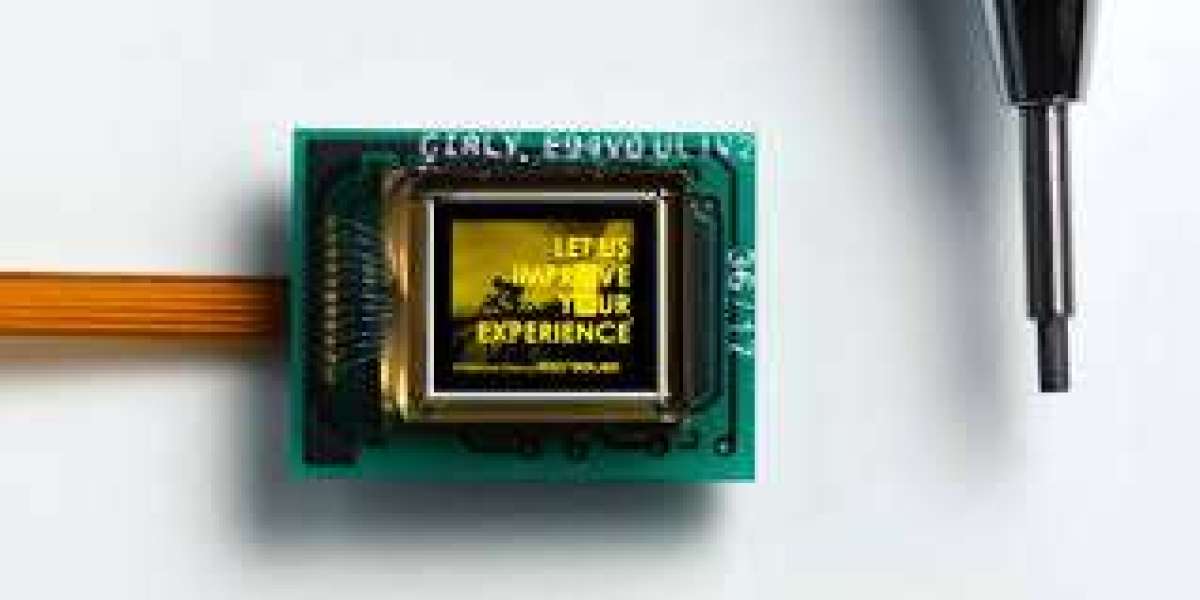

The micro OLED display has become the core technology for advanced AR and VR headsets, offering unmatched pixel density, contrast, and color quality. However, despite its incredible potential, it still faces several real-world challenges that affect mass adoption and performance reliability. These problems are not about how micro OLED works — but why it’s still not perfect for large-scale optical systems.
In this article, we’ll explore the major issues affecting micro OLED displays, including brightness control, thermal management, pixel uniformity, cost, and lifetime — along with how manufacturers are solving them.
Brightness Limitations in Outdoor or High-Luminance Environments
One of the biggest challenges of micro OLED technology is brightness output. While micro OLED offers deep blacks and high contrast, its maximum luminance often remains lower than micro-LED or LCOS displays.
This brightness limitation makes it harder to use in outdoor or high-luminance AR devices, where ambient light can overpower the screen. The problem arises because OLED materials are organic — they degrade faster at high current density, causing luminance decay and color imbalance over time.
Manufacturers are now working on hybrid OLED-on-silicon solutions, integrating reflective coatings and advanced cooling systems to improve brightness without burning the display.
Burn-In and Lifetime Degradation
Like standard OLED panels, burn-in remains a serious issue for micro OLED. In static image use (like AR menus or HUDs), some pixels age faster than others, creating ghost images or brightness retention.
This degradation affects color stability and display uniformity, especially in professional or military-grade headsets that run long hours.
To address this, companies are experimenting with pixel-shifting algorithms, AI-based compensation layers, and blue OLED material improvements, which can extend the display lifespan by 30–40%.
Thermal Management and Power Efficiency
Micro OLED displays generate heat due to their compact silicon substrate and high pixel density. Excessive heat can affect performance, create image flickering, and accelerate material decay.
AR/VR headsets using micro OLED modules often face this issue because limited space restricts airflow and cooling.
Newer designs now use low-power driving circuits, optimized panel layouts, and AI-driven heat control algorithms to maintain image stability without overloading the device’s processor.
Production Cost and Yield Rate Problems
Micro OLED fabrication requires vacuum deposition, high-precision alignment, and silicon wafer bonding, which are complex and expensive steps. Even a small defect can cause yield loss, increasing overall cost.
Because of this, mass production for consumer-level AR glasses is still not economically feasible.
To reduce costs, display makers are shifting toward larger wafer sizes and monolithic integration, where multiple layers are fabricated directly on the same substrate, improving consistency and output efficiency.
Pixel Uniformity and Color Accuracy
Pixel uniformity problems occur due to sub-pixel misalignment or variations in deposition thickness. This leads to uneven brightness, color tinting, or mura (clouding) effects in the final display.
Since AR/VR devices require accurate color representation for immersive experiences, even minor pixel mismatches become visible.
To solve this, calibration algorithms and AI-based correction layers are applied post-production, ensuring consistent display performance across the entire field of view.
The Future: Hybrid Micro Displays and AI Calibration
Despite its current limitations, the future of micro OLED is bright.
Innovations such as tandem OLED layers, quantum dot enhancement, and hybrid microdisplay systems are helping overcome today’s bottlenecks.
In addition, integrating AI calibration and adaptive brightness control can optimize power and color in real time, making micro OLED the top choice for next-generation AR/VR optics, EVF modules, and military displays.
For a deeper look at how this technology is evolving, explore the latest designs at AR VR Optical’s micro OLED display collection.
Conclusion
Micro OLED display technology has come a long way — offering stunning contrast, low latency, and pixel-level precision. Yet, challenges like burn-in, brightness control, and manufacturing yield continue to slow mainstream adoption.
As more optical companies integrate AI calibration and develop advanced material science, micro OLED will likely become the standard display engine for AR/VR in the coming years. Its combination of compact design, superior resolution, and flexible engineering makes it worth every improvement ahead.